
Role
Lead Frontend Engineer
Technical development project
As Lead Frontend / Next.js Engineer, I built a fast marketing and onboarding presence that explains AI-assisted orchestration, preserves complex layout fidelity, and moves qualified users into a Firebase-backed low-code demo workspace.
Role
Lead Frontend Engineer
Product
Enterprise iPaaS
Goal
Marketing to demo funnel
Frontend pipeline
RSC to workspace
Marketing page
01Developer registration
02Firebase Auth session
03Firestore profile state
04Low-code demo workspace
0501
Aonflow needed a high-performance marketing and onboarding platform for a complex enterprise iPaaS product. The site had to explain AI-assisted orchestration, connector logic, and low-code automation without slowing down first paint or sacrificing the precision of the original interface design.
The implementation problem was not just page assembly. The frontend had to carry dense product narratives, feature matrices, workflow diagrams, and registration entry points while keeping layout behavior predictable across desktop, tablet, and mobile breakpoints.
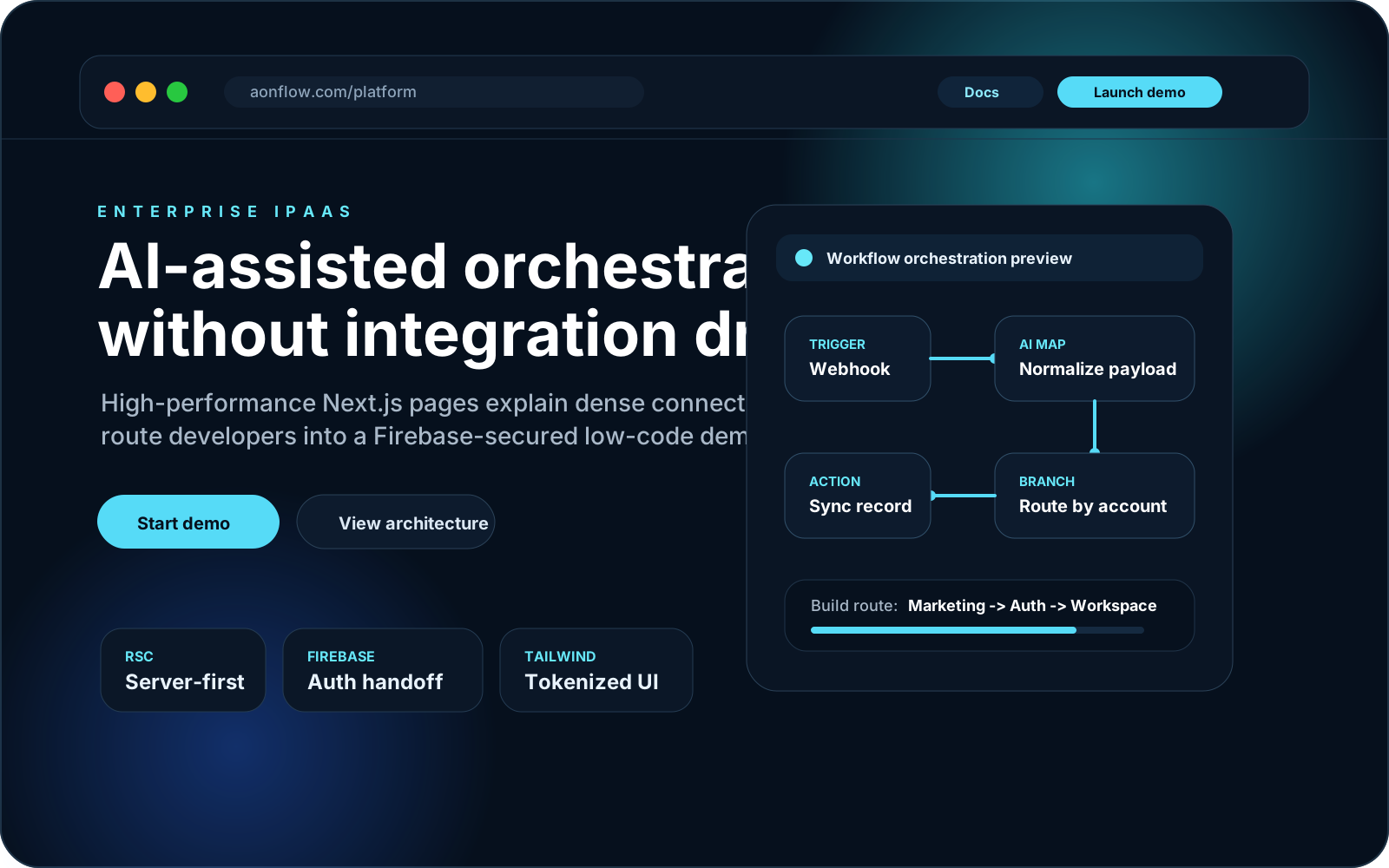
A high-fidelity mockup showing the public Aonflow product story, platform CTA, and orchestration preview used to explain the AI-assisted demo funnel.
02
I used Next.js App Router as the primary architecture layer, structuring the site around server-rendered routes and React Server Components wherever the page did not need runtime interactivity. This kept content-heavy product sections fast, crawlable, and immediately available while reducing the amount of JavaScript shipped to the browser.
Tailwind CSS was treated as a constrained design-token system rather than a styling shortcut. Shared utility patterns handled spacing, type scale, surfaces, border behavior, CTA states, and responsive grids, which prevented one-off CSS growth as the product story expanded.
Content-heavy product pages were kept server-rendered so visitors reached meaningful enterprise messaging before client-side code was needed.
Interactive behavior was isolated to auth-aware CTAs, onboarding handoff states, and demo workspace entry instead of hydrating the whole page.
Spacing, typography, surfaces, grids, and states were expressed as reusable Tailwind patterns to avoid stylesheet drift and CSS payload growth.
Connector matrices and orchestration previews used controlled grid tracks, min-width rules, and overflow-safe content so dense data stayed readable.
For dense, data-heavy UI grids, I used responsive grid tracks, controlled max-widths, consistent row rhythm, and overflow-safe content blocks. Connector tables, feature comparisons, and orchestration previews could compress gracefully without text collisions, horizontal layout breaks, or cumulative layout shift.
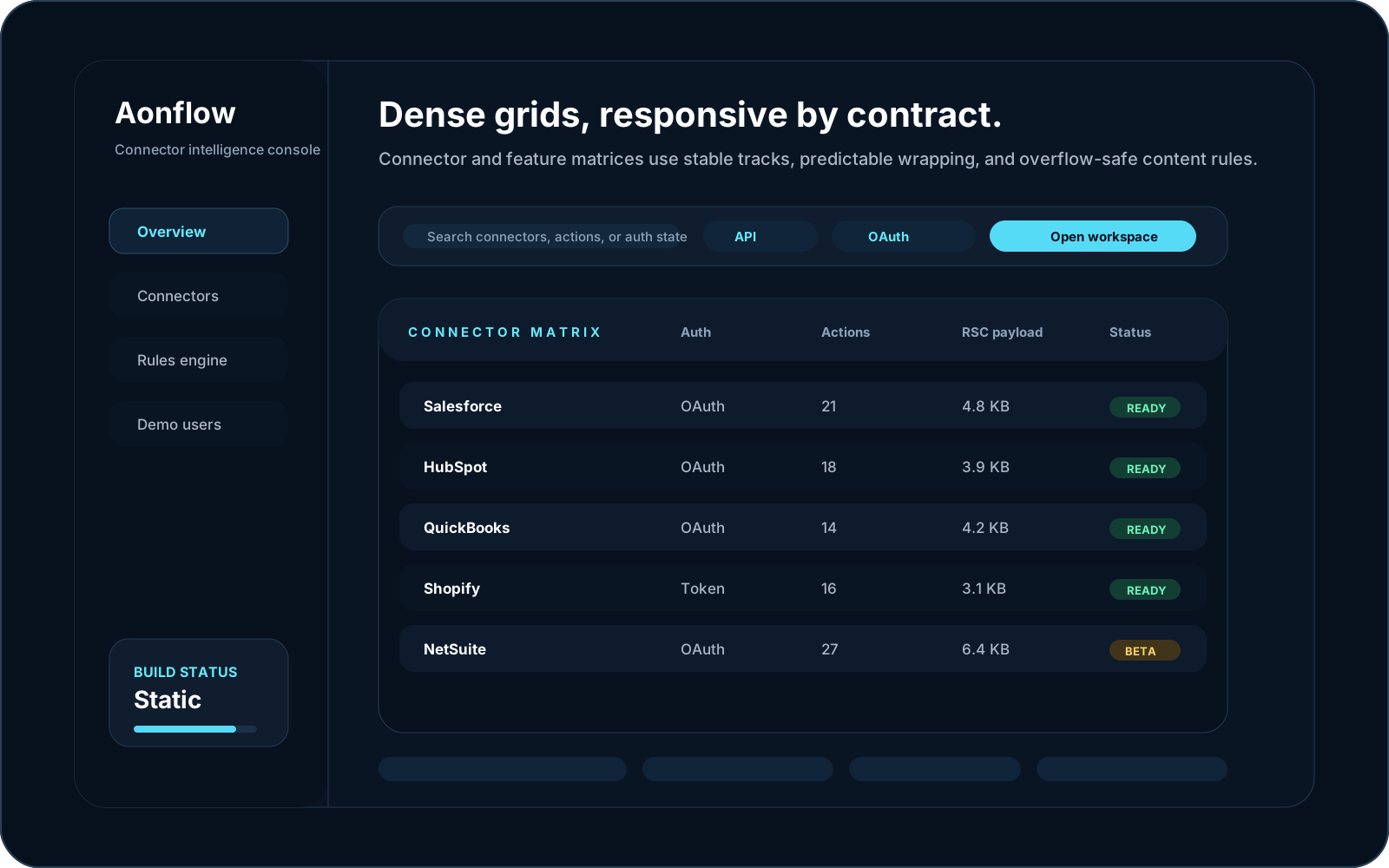
A dense enterprise grid mockup built around controlled columns, stable row rhythm, and responsive content rules for connector-heavy product sections.
03
Firebase Authentication powered the registration path from public marketing pages into the live low-code demo workspace. The flow was engineered for low-friction developer signup: authenticate quickly, preserve session state, and continue directly into the relevant demo context.
Firestore provided the lightweight application state needed after authentication, including profile metadata, onboarding progress, and workspace access status. I kept auth logic isolated from presentation components so marketing sections stayed static and fast, while protected workspace entry points could respond to the user's session state.
Step 01
Marketing page
Step 02
Developer registration
Step 03
Firebase Auth session
Step 04
Firestore profile state
Step 05
Low-code demo workspace
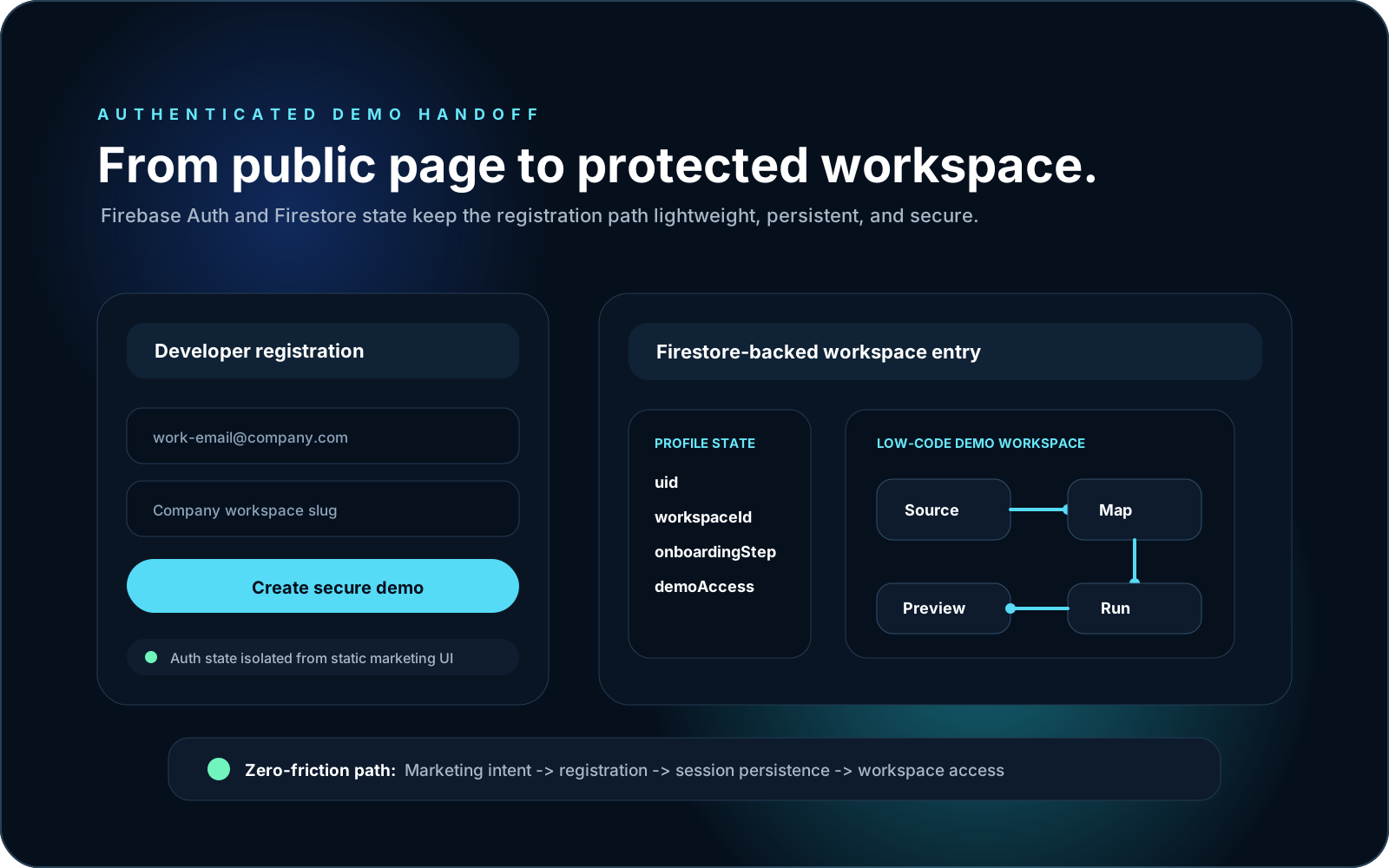
A registration-to-workspace mockup showing how Firebase Auth and Firestore state support a low-friction but protected developer demo path.
04
The final implementation was built as a reusable frontend system instead of a one-off landing page. Product sections, connector grids, proof blocks, onboarding CTAs, and authenticated workspace links were abstracted into repeatable patterns that could support future iPaaS modules without rebuilding the page structure.
Reusable section, grid, CTA, connector, and workspace-entry abstractions.
Design tokens mapped to Tailwind utilities for consistent spacing, color, borders, and responsive behavior.
Server-rendered product content optimized for SEO, fast crawlability, and low hydration cost.
Stable layouts engineered to reduce cumulative layout shift across enterprise feature grids.
The result was a fast, SEO-ready frontend that could explain an enterprise-grade iPaaS product, convert technical visitors into registered demo users, and maintain Core Web Vitals discipline as content density increased.
Back to homepage